
SEO & AI Search News – October 2026
SEO & AI Search News
SEO & AI Search News – October 2026

 ChatGPT
 Claude
 Perplexity
 Grok
 Google AI
 You
 WhatsApp
 LinkedIn
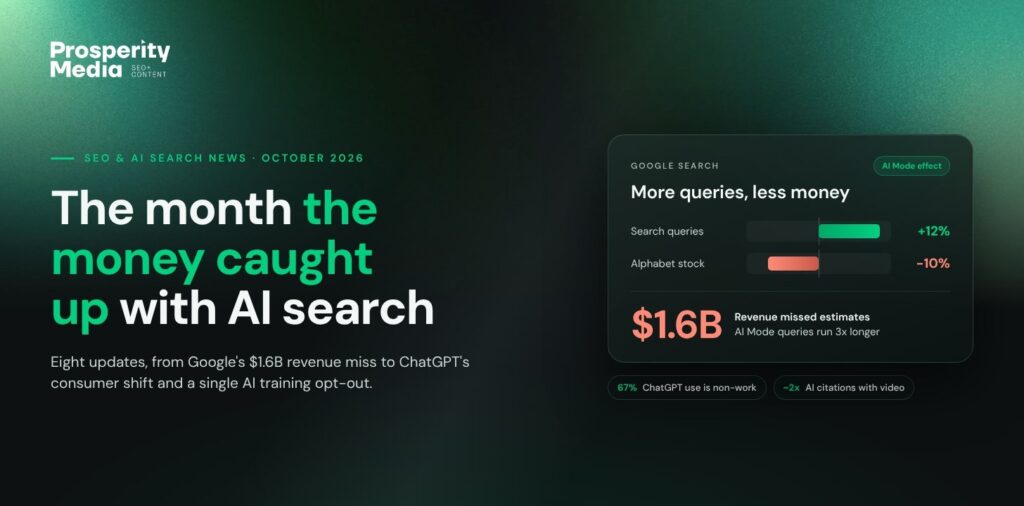
October was the month the money caught up with the AI search story. Google grew queries 12% and still missed its own revenue estimates by $1.6 billion, ChatGPT confirmed that most of its traffic is now personal rather than work, and the major model providers quietly agreed on a single way to opt out of AI training. None of it led the news, but all of it shapes what we prioritise heading into November.
Here are the eight updates worth your attention, each with the evidence behind it and what I would actually do about it. Prefer the short version in video? Aaron runs through the highlights in the monthly roundup, and the full written breakdown is below.
Key Takeaways
- Google’s AI problem is now financial. Search revenue missed estimates by $1.6 billion even as queries grew 12%, because AI Mode queries run three times longer and monetise worse.
- ChatGPT has become a consumer product. Non-work use has overtaken work use at 67%, with practical guidance, writing, and information seeking as the top three use cases.
- There is finally one opt-out token for AI training. OpenAI, Anthropic, Google, and Microsoft have aligned on a single robots.txt directive, but using it carelessly can block Google-Extended by accident.
- Video now compounds your written content. Pairing a blog with a video almost doubled AI citations within a week in one experiment, and YouTube drives 31.8% of AI social citations.
- Agentic checkout has arrived on Shopify. WebMCP lets browser-based AI agents complete full transactions, including Shop Pay.
- Rank tracking is under pressure. Google is moving against the SERP scraping that feeds AI agents, which raises real questions about the future of rank data.
- AI Overviews are taking brand queries. On most brand-name searches checked, an AI Overview held the top position, though the click impact is still unmeasured.
- Local search is going agentic too. Google is testing “Have AI check prices” buttons in the Maps local pack.
1. Google Searches Are Up 12%, but the Stock Fell 10%
Google grew search queries by 12% and still missed its own revenue estimates by $1.6 billion. The market read that as a warning, and Alphabet’s stock dropped around 10% on the back of it (Gadget Review).
The reason is AI Mode. Those queries are roughly three times longer than a traditional search, and they monetise at a lower rate because the answer sits above the ads rather than alongside them. More usage is not translating into more revenue at the same pace, and that gap is the whole story. Alphabet’s planned fix is multi-turn conversational ads in the US, which try to place commercial messages inside the back-and-forth of an AI answer.
What I would do: Stop treating AI Mode as a channel you cannot influence. The queries are longer and more specific, which means they map to deeper, more intent-rich content than a classic head term. Audit which of your pages answer the follow-up questions a conversation naturally leads to, not just the opening query, because that is where the citations, and eventually the ad formats, will land.
2. ChatGPT’s Usage Data Is Out, and Non-Work Use Has Overtaken Work at 67%
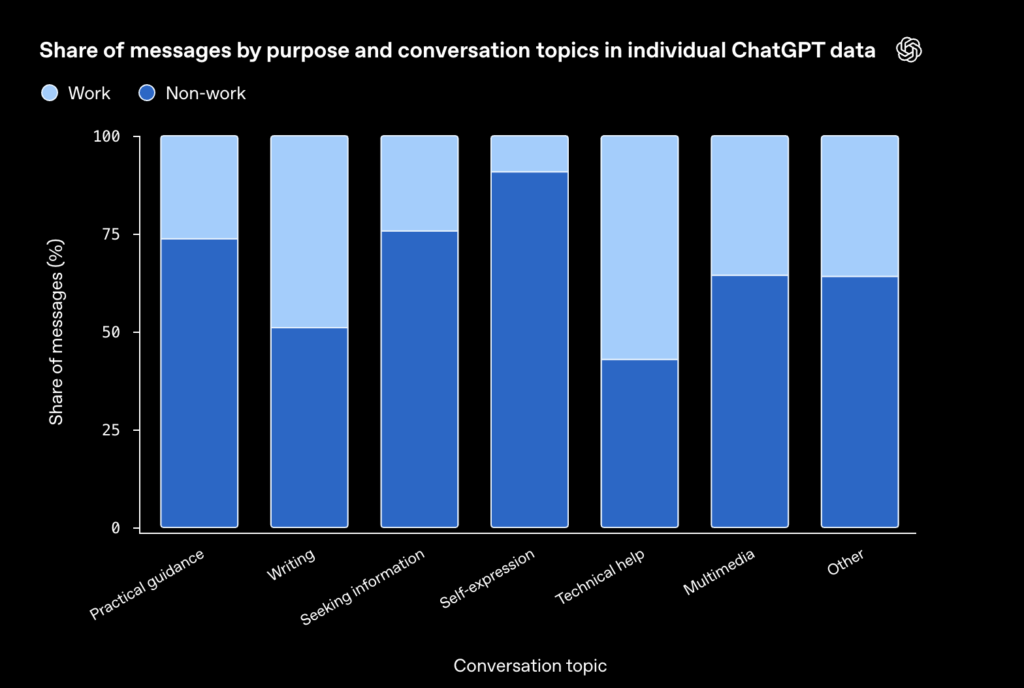
OpenAI released data on how people actually use ChatGPT, and the headline is that non-work activity now makes up 67% of usage (OpenAI). The platform has quietly become a consumer product more than a workplace tool.
The top three use cases are practical guidance, writing, and information seeking. That last one matters most for us, because information seeking is exactly the behaviour that used to start on Google. People are asking ChatGPT the questions they once typed into a search bar, and they are doing it for personal decisions as much as professional ones.
What I would do: Treat ChatGPT as a genuine discovery surface for consumer queries, not just B2B research. If your brand only shows up for work-related prompts, you are missing two thirds of the behaviour. Map the personal, everyday questions your audience asks around your category, and make sure your content answers them in a way a model can lift cleanly.
3. OpenAI, Anthropic, Google, and Microsoft Agree on One AI Training Opt-Out Syntax
The four big model providers have aligned on a single robots.txt directive for managing AI training preferences. Instead of juggling a different token per provider, you can set a User-Agent: __usage_ai-training rule with Disallow: / and cover them in one step (AI Weekly).
There is a catch worth flagging. According to John Mueller, opting out via this token without also specifying Google-Extended is interpreted by Google as disallowing Google-Extended anyway. The shorthand is convenient, but you need to understand what it implicitly switches off before you deploy it.
What I would do: Decide deliberately whether you want to be in or out of AI training, then set it once and document it. For most of our clients the answer is to stay in, because training inclusion and citation visibility are linked, and blocking training can quietly remove you from the models that are now driving discovery. If you do opt out, do it with full knowledge of what the single token takes with it.
4. Pairing a Written Blog With a Video Can Almost Double Your AI Citations
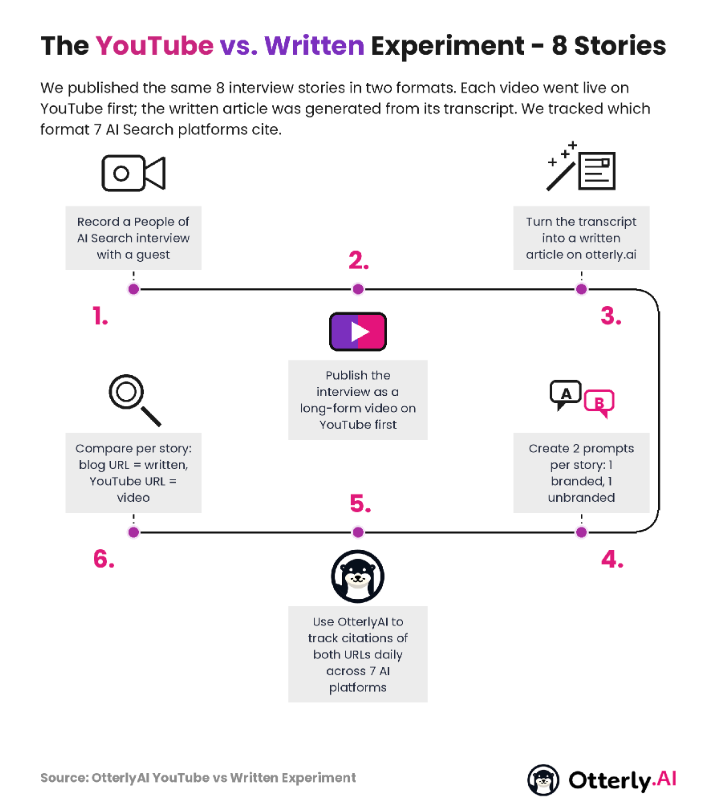
Otterly ran an experiment across eight interview stories, publishing each as both a YouTube video and a written article generated from the transcript, then tracking which format the AI platforms cited (Otterly.ai). Written blogs led early, capturing 79.5% of citations within the first few days. Within a week, video citations almost doubled, moving from 15% to 26%, with Perplexity leading platform adoption at 41.5%.
The wider data backs the direction. Industry figures show 31.8% of AI social citations are YouTube, and 94% of those are long-form. Gemini’s share of YouTube citations jumped from 0.2% to roughly half over the experiment, which tells you how fast the platforms are re-weighting video.
What I would do: Stop thinking of video and written content as separate programs. The pattern here is that the written piece earns the early citation and the video compounds it over the following week. For any priority topic, publish the article and a companion video built from the same substance, and get the video onto YouTube as long-form rather than a short clip. This monthly update is exactly how we are applying it.
5. Shopify Releases WebMCP, Letting AI Agents Check Out Natively
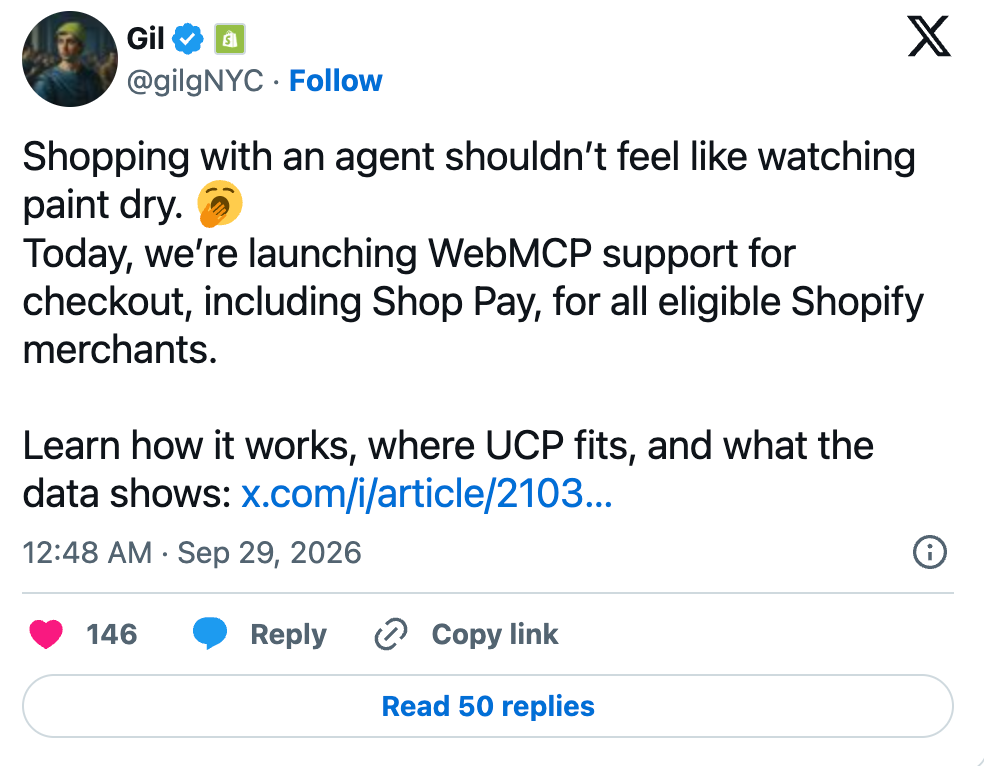
Shopify has released WebMCP, which lets browser-based AI agents complete full transactions on merchant sites, including Shop Pay (TechCrunch). The agent can read the screen, update details, and submit an order with the buyer’s authorisation, without scraping or screenshots.
What I would do: For any client on Shopify, treat agent-readiness as a near-term commerce project, not a someday idea. Clean product data, clear pricing, unambiguous variant and availability signals, and structured content are what an agent needs to transact confidently. The stores that are easiest for an agent to read and check out from will win the agentic purchases, and that work overlaps almost entirely with good technical SEO. If you’re not thinking about agentic commerce, I would start now.
6. Google Moves Against SERP Tracking
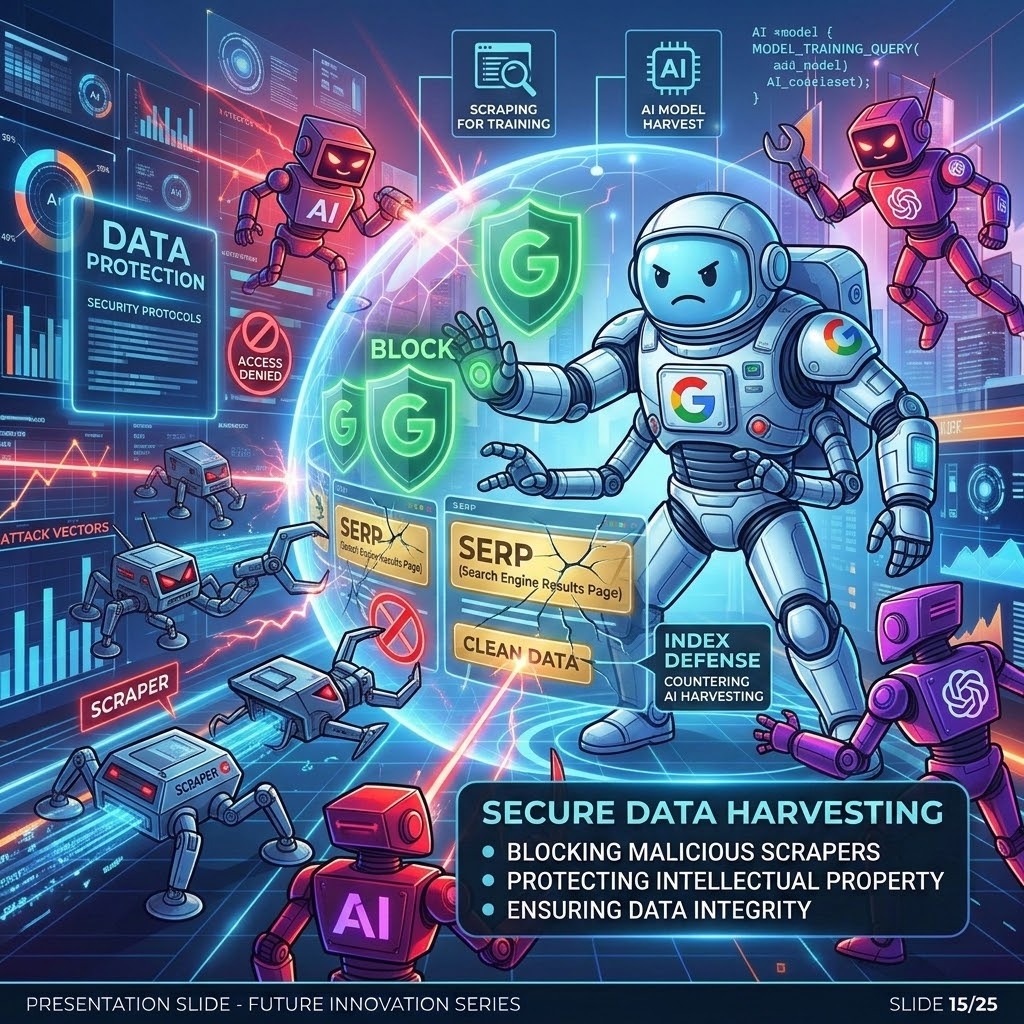
Google is fighting a new wave of SERP scraping, driven by AI agents and LLM networks reverse-engineering its results (Search Engine Journal). Rank trackers are the public face of this, but the real battle is over the much larger volume of automated scraping feeding AI systems.
The open question for us is what it does to rank tracking. If Google tightens access to defend against AI scraping, the tools we rely on for position data get caught in the same net. It raises a genuine possibility that traditional rank tracking becomes less reliable, or obsolete, as a measure.
What I would do: Reduce your dependence on raw position tracking as the headline metric now, before the decision is made for you. Shift weight onto Search Console clicks and impressions, share of voice, and AI citation and mention tracking, which measure outcomes rather than positions. We have been moving reporting in this direction already, and this is the reason to accelerate it.
7. AI Overviews Are Cannibalising Big-Brand Queries
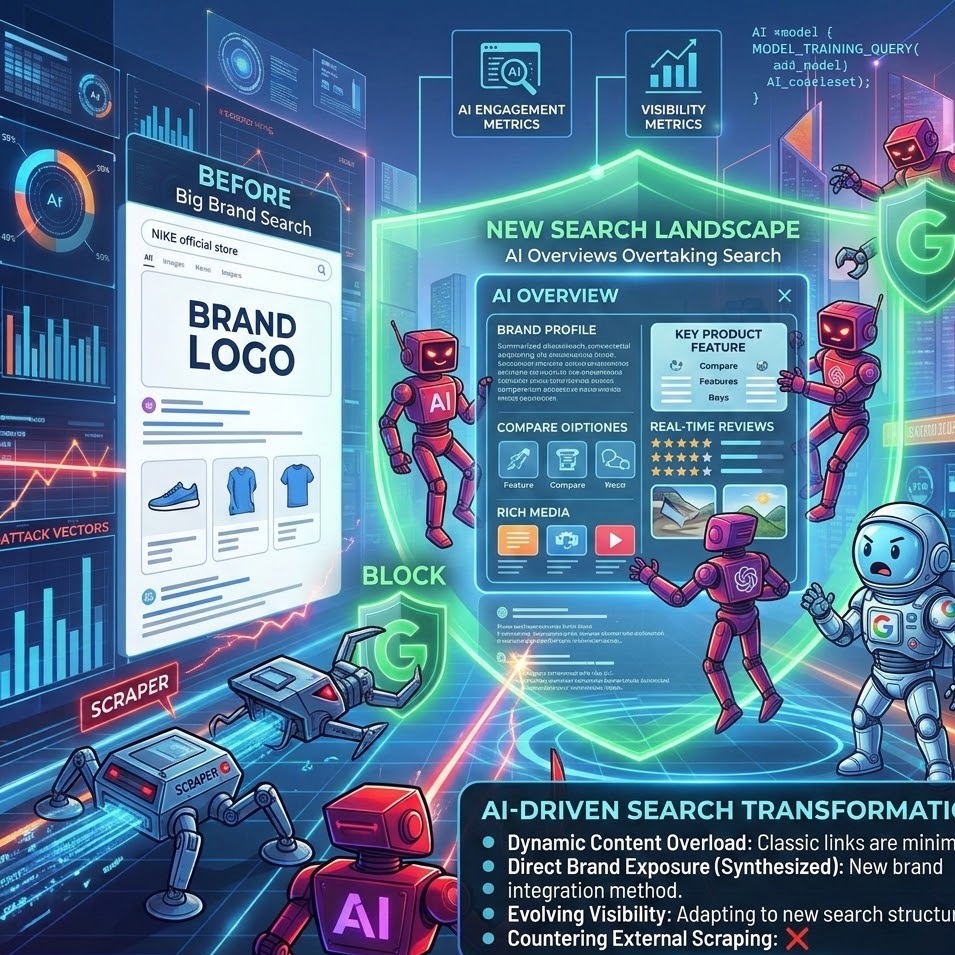
Recent tracking data found AI Overviews appearing on most of the brand-name searches it checked (Search Engine Journal). In one panel of global brands, the AI Overview held the first position on most of those queries, sitting above the brand’s own result.
The caveat matters. The data counts where AI Overviews appear, not what they do to clicks, and it does not show how often a brand’s own site was cited inside the overview. So we know AI Overviews are now standard on branded search, but the downstream effect on traffic is still unmeasured.
What I would do: Check your own branded SERPs manually, because this is easy to verify and easy to ignore. If an AI Overview is sitting above your brand result, your priority is making sure your own site is the cited source inside it. That means clear, extractable answers to the obvious brand questions, strong entity signals, and content that a model would rather quote than paraphrase from a third party.
8. Spotted: Google Is Testing “Have AI Check Prices” in Maps
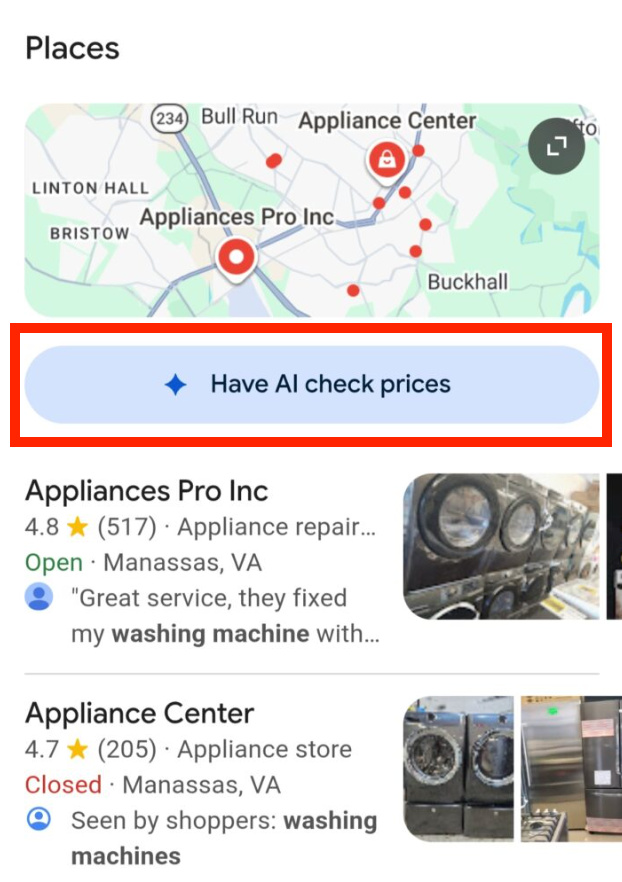
Google is testing AI-powered price-checking buttons inside the local results pack (Search Engine Watch). Nathan Gotch spotted a “Have AI get prices” feature on desktop, with a “Have AI check prices” version on mobile.
It is early and it is a test, so do not over-read it. The direction, though, is clear enough. Google is pushing agentic, AI-assisted features into local search, where buying decisions are close and intent is high.
What I would do: Make sure your local and product data is accurate and complete wherever Google can read it, from your Business Profile to on-page pricing and structured data. If Google starts letting AI fetch and compare prices on a searcher’s behalf, the businesses with clean, machine-readable pricing are the ones that get surfaced accurately. Messy or missing data is how you get left out of the comparison.
What I Would Prioritise This Month
- Audit your content for conversational depth. AI Mode and ChatGPT both reward content that answers the follow-up questions, not just the opening query. Find where your pages stop short.
- Make a deliberate AI training decision. Set the opt-out syntax once, document it, and understand what the single token switches off before it goes live.
- Pair priority articles with long-form video. The written piece earns the early citation and the video compounds it. Build both from the same substance and publish to YouTube.
- Shift reporting away from raw rank tracking. Lean on clicks, impressions, share of voice, and AI citations, because position data is about to get less dependable.
Frequently Asked Questions
Why did Google’s stock fall when searches went up?
Google grew queries 12% but missed its revenue estimates by $1.6 billion, because AI Mode queries are about three times longer than traditional searches and monetise at a lower rate. More usage is not converting into proportional ad revenue, and the market priced in that gap.
Is it true that most ChatGPT use is now personal rather than work?
Yes. OpenAI’s own usage data shows non-work activity has overtaken work activity at 67%, with practical guidance, writing, and information seeking as the top three use cases. ChatGPT now behaves more like a consumer discovery tool than a workplace one.
How do I opt out of AI training across all the major providers at once?
OpenAI, Anthropic, Google, and Microsoft have aligned on a single robots.txt directive, so a User-Agent: __usage_ai-training rule with Disallow: / covers them together. Be aware that, per John Mueller, using this token without specifying Google-Extended is read by Google as disallowing Google-Extended as well, so understand what it switches off before you deploy it.
Does adding a video to a blog post actually improve AI citations?
In Otterly’s experiment it almost doubled them. Written articles captured most citations in the first few days, and within a week video citations rose from 15% to 26%. YouTube now accounts for 31.8% of AI social citations, and 94% of those are long-form, so a companion video compounds the written piece rather than competing with it.
What is Shopify’s WebMCP, and why does it matter for SEO?
WebMCP lets browser-based AI agents complete full transactions on Shopify stores, including Shop Pay, with buyer authorisation and no scraping. It matters because agentic checkout rewards the same things good technical SEO does, namely clean product data, clear pricing, and structured content, so the stores easiest for an agent to read will win agent-driven purchases.
Should I stop using rank tracking?
Not yet, but stop relying on it as your headline metric. Google is moving against the SERP scraping that rank trackers depend on, which may make position data less reliable over time. Shift weight onto clicks, impressions, share of voice, and AI citation tracking, which measure outcomes rather than positions.
Want This Translated Into Your Strategy?
If you want help turning any of this into a plan for your site, from AI Mode content to agent-ready product data, that is what we do. Get in touch with the Prosperity Media team and we will show you where the opportunities are.
Aaron Taylor is the General Manager at Prosperity Media, a Sydney-based SEO, content, and digital PR agency. He leads the team’s SEO and AI search strategy across clients in automotive, financial services, health, ecommerce, and SaaS.
